
Cap, Field Dress, Camouflage
Little is known about this cap at present other than that it originates from Thailand and was in use during the late 1990s.
Thailand

Little is known about this cap at present other than that it originates from Thailand and was in use during the late 1990s.

Like many Western armies, the New Zealand Defence Force (NZDF) did not issue a dedicated patrol pack to its soldiers for many years. Troops who needed one were often left to source or purchase their own—resulting in a mix of commercial and improvised options being used in the field.
Read More »

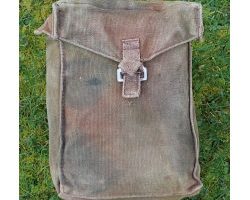
The Pouch, Canvas, Utility was fabricated from heavy cotton canvas and appears to have been influenced by the British SAS Pouch, Ration, Escape. Its design suggests post-war adaptation or local manufacture inspired by British special forces equipment used during jungle operations in Southeast Asia.


During the Malayan Campaign of the early 1960s, Special Air Service (SAS) patrols operated deep in the jungle for weeks or even months at a time. They required low-mounted utility pouches to carry Escape and Evasion (E&E) equipment—pouches that could ride beneath the bergen’s A-frame and hold enough survival gear to allow a trooper to operate without a full field pack until reaching friendly lines or extraction.

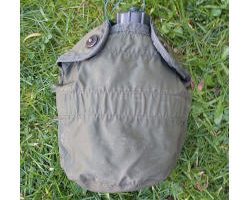
In the late 1970s, Singapore began developing a new web equipment system to replace its earlier cotton-based sets with more modern materials. This system was designed not only to carry the standard water bottle but also to accommodate a Mills-type water filter bank and water sterilization tablets, reflecting the growing emphasis on field hygiene and modular utility.
Read More »


When U.S. M-1945 field packs ran short, the Republic of Korea developed its own version, modeled on the American design but adapted to local requirements.
Read More »


The Jäger Rucksack was first introduced by the Bundeswehr in the early 1960s as a more compact alternative to the large rucksack. Unlike its predecessor, it could be worn independently of the web suspenders and frame, reducing bulk while still offering enough capacity for extended periods in the field.

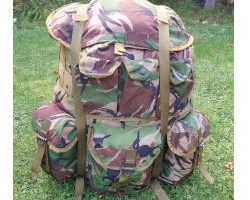
In the early 1990s, the New Zealand Defence Force began producing the large ALICE pack in temperate DPM (Disruptive Pattern Material) as a replacement for the earlier green version. Aside from the camouflage fabric, the overall design remained consistent with previous iterations.
Read More »
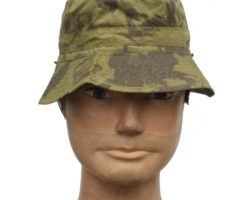
The Hat, Utility, Camouflage, Waterproof was first issued in the mid-1960s, alongside a waterproof smock made in the same camouflage pattern. Designed for use in humid jungle environments, the hat was issued in more limited numbers than the smock.

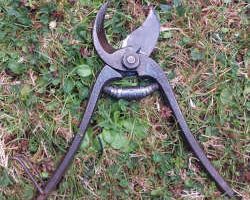
Secateurs—a hand tool more commonly found in the garden shed and often wielded by old ladies trimming rose bushes—are not something most people associate with soldiers. Yet, these heavy-duty shears, designed for cutting and pruning bushes and small trees, found their way into the kit of Australian and New Zealand troops operating in dense jungle environments.
Read More »
